
Can You Live With One Lung After Cancer Surgery? Recovery, Life Expectancy and What to Expect
Can You Live With One Lung After Cancer Surgery?


Can You Live With One Lung After Cancer Surgery? What Happens to Your Body After Lung Removal?
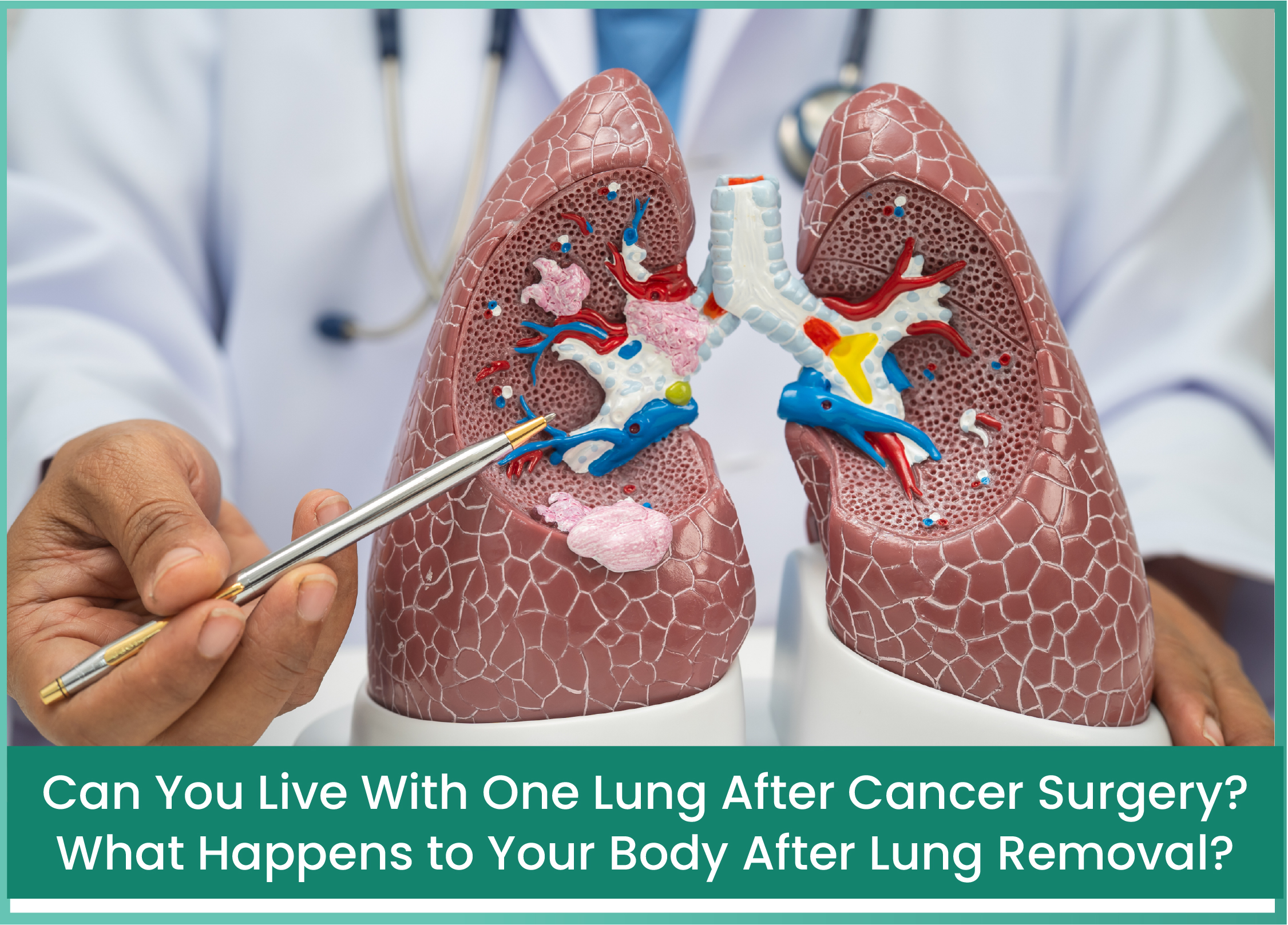
Imagine being told that an entire lung may need to be removed to treat cancer. For most people, the first thought is frightening: How will I breathe with just one lung? Will I be able to walk, sleep, travel or even perform simple everyday activities? Does losing a lung mean losing the ability to live a normal life?
These are not unusual questions. In fact, they are among the biggest concerns people have when they learn that lung removal surgery may be necessary.
The good news is that the human body is more adaptable than we often realise. Yes, it is possible to live with one lung. Many people continue living for years after having an entire lung removed. They return to their daily routines, spend time with family, work and participate in activities they enjoy.
However, life after lung removal is not exactly the same for everyone. Some people adjust surprisingly well, while others notice that they become breathless more easily or need additional time to complete physical activities.
To understand why this happens, it helps to look at how the lungs work, what changes after surgery and how the body gradually learns to function with just one lung.
Why Do Doctors Sometimes Need to Remove an Entire Lung?
Before discussing life with one lung, it is important to understand why such a major operation may be necessary in the first place.
The lungs are responsible for bringing oxygen into the body and removing carbon dioxide. The right lung has three lobes, while the left lung has two. Together, they allow us to breathe and provide oxygen to every organ.
When lung cancer develops, the treatment depends on where the tumour is located, how large it is and whether it has spread to nearby structures.
In many cases, doctors can remove only the affected portion of the lung. This may involve removing a small section or an entire lobe. However, there are situations in which the cancer is located near the centre of the lung, involves major airways or blood vessels, or affects multiple lobes.
When removing a smaller portion cannot safely remove all the cancer, doctors may consider a procedure called a pneumonectomy.
A pneumonectomy involves removing the entire right or left lung. It is a major operation, and it is recommended only after careful assessment of the patient's breathing capacity, heart function and general health.
The decision is never based on the tumour alone. Doctors must also consider whether the remaining lung will be able to support the patient's breathing after surgery.
What Actually Happens Inside Your Body When One Lung Is Removed?
It may seem impossible to imagine how the body continues functioning after losing an entire lung. After all, we have two lungs for a reason.
However, the body does not necessarily need two lungs to perform its basic functions.
When one lung is removed, the remaining lung continues taking in oxygen and transferring it into the bloodstream. It also removes carbon dioxide, just as it did before surgery.
What changes is the amount of breathing capacity available.
Think of it this way: before surgery, both lungs share the responsibility of breathing. After surgery, the remaining lung takes on a greater share of that responsibility.
The space inside the chest also changes. Over time, the remaining lung may expand into some of the available space. The diaphragm and other breathing muscles continue working and adjust to the changed structure of the chest.
The heart and blood circulation also adapt to the changes in blood flow through the lungs.
This does not mean that the remaining lung grows into a completely new pair of lungs. Rather, the body gradually adjusts to functioning with less lung tissue.
A diagnostic mammogram differs from a screening mammogram because the imaging is performed with the known clinical concern in mind. This adjustment is one of the reasons people can continue living with one lung after cancer surgery.
Will You Feel Breathless for the Rest of Your Life?
This is probably one of the most personal concerns patients have.
The experience of breathing after pneumonectomy varies considerably. Some patients feel relatively comfortable during everyday activities after recovery, while others notice that their breathing becomes more difficult when they exert themselves.
The reason is simple: removing an entire lung reduces the total amount of lung tissue available for exchanging oxygen and carbon dioxide.
You may notice the difference when walking quickly, climbing stairs, carrying groceries or trying to exercise.
For example, a staircase that you could previously climb without thinking may suddenly leave you needing a short break. Walking uphill may feel more tiring, and activities requiring considerable physical effort may take longer.
This does not necessarily mean something has gone wrong.
The body needs time to adjust, and physical stamina may gradually improve as recovery progresses.
However, not every patient returns to their previous breathing capacity. The outcome depends partly on how healthy the remaining lung was before surgery.
Someone with healthy lungs before the operation may adjust differently from someone who already had chronic breathing problems.
How Long Does It Take to Feel Better After Losing a Lung?
Recovery after pneumonectomy is not something that happens overnight.
In the beginning, the body is dealing with the effects of a major operation. There may be pain, tiredness, reduced mobility and difficulty taking deep breaths.
During the hospital stay, doctors and nurses monitor breathing, oxygen levels, heart function and other signs of recovery. Patients are generally encouraged to begin gentle movement when it is safe.
The first few weeks at home are usually focused on healing. Even simple activities may require more energy than before. Walking short distances, resting when tired and gradually becoming more active are important parts of recovery.
Over the following weeks and months, many patients begin noticing improvements in their ability to move around and perform everyday tasks.
Some may return to desk-based work, while others need more time before resuming physically demanding activities.
Recovery can continue for several months. There is no universal timeline because every patient's body, health condition and surgical experience are different.
It is also important to remember that additional cancer treatment, such as chemotherapy, may affect energy levels and recovery.
Can You Live Normally With One Lung?
The word "normal" means something different to every person.
For one patient, it may mean returning to work. For another, it may mean being able to walk in the park, travel with family or climb the stairs at home without assistance.
The encouraging part is that many people do return to meaningful everyday activities after lung removal surgery.
A person with one lung may still be able to:
- Walk independently and perform household activities.
- Return to office-based work after recovery.
- Sleep comfortably.
- Travel after medical clearance.
- Participate in gentle physical activities.
- Spend time with family and friends.
However, some activities may require adjustments.
Heavy lifting, running long distances or performing intense exercise may become more challenging. Patients may need to slow down, take breaks or modify certain activities.
This is why recovery should not be measured by how quickly someone returns to their old routine. What matters is gradually finding a comfortable and safe level of activity.
Does the Remaining Lung Become Stronger?
The remaining lung does adapt after surgery, but the process is slightly different from what many people imagine.
It does not regenerate into two separate lungs. Instead, the remaining lung may expand and adjust to the increased demand placed on it.
The body also becomes more efficient at managing its available breathing capacity.
Breathing muscles play an important role in this adjustment. The diaphragm, which is the main muscle involved in breathing, continues helping the lungs expand and contract.
This is why doctors may recommend breathing exercises and pulmonary rehabilitation after surgery.
Such programmes can help patients improve their breathing techniques, regain physical strength and become more comfortable with daily activities.
The aim is not to replace the removed lung but to help the body make the best possible use of the remaining lung.
What Does Life Look Like a Few Months After Surgery?
The first few weeks after lung removal can feel overwhelming. But as healing progresses, patients often begin discovering what their bodies can comfortably manage.
A morning walk may become easier. Getting dressed may require less effort. Simple household activities may gradually become part of the routine again.
Some people return to their jobs, while others take longer depending on the nature of their work.
One important adjustment is learning to manage energy.
Instead of rushing through activities, patients may find it helpful to divide tasks into smaller steps. Taking short breaks, avoiding unnecessary exertion and planning activities around energy levels can make daily life easier.
Patients should also avoid assuming that every episode of breathlessness is simply part of having one lung. New or worsening symptoms need medical attention.
Why Is Protecting the Remaining Lung So Important?
After pneumonectomy, the remaining lung becomes especially important for maintaining breathing and oxygen supply.
This makes every day respiratory health habits more significant.
Smoking is one of the most important things to avoid. Tobacco smoke can damage the airways and healthy lung tissue. Exposure to second-hand smoke should also be minimised.
Air pollution, dust and chemical fumes can irritate the respiratory system. Where possible, patients should reduce exposure and use appropriate protection in environments where these hazards cannot be avoided.
Respiratory infections also deserve attention. A chest infection affecting the only remaining lung can have a significant impact on breathing.
Maintaining good hygiene, following appropriate vaccination advice and seeking medical attention for persistent fever or worsening cough are sensible precautions.
Nutrition matters too. The body needs sufficient protein, vitamins and other nutrients to recover from major surgery and maintain muscle strength.
Physical activity, once approved by the medical team, can also support long-term fitness.
These habits cannot eliminate every possible complication, but they can contribute to better respiratory health.
Can Lung Cancer Return Even After Removing the Entire Lung?
Removing the affected lung can be an important step in treating certain lung cancers, but it does not guarantee that cancer will never return.
Cancer behaviour depends on several factors, including its type, stage and whether cancer cells have spread to lymph nodes or other parts of the body.
This is why surgery is sometimes followed by additional treatment.
Chemotherapy may be recommended to target cancer cells that could remain in the body. Certain patients may also benefit from immunotherapy or targeted therapy, depending on the tumour's characteristics and test results.
For example, molecular testing may identify changes such as EGFR or ALK alterations that can influence treatment decisions.
Regular follow-up is equally important. Imaging tests and consultations help the medical team monitor recovery and look for possible signs of recurrence.
The role of a medical oncologist is particularly relevant here because cancer treatment does not always end when surgery is completed.
Does Having One Lung Affect Life Expectancy?
This question can be difficult to answer because two different issues are involved: living with one lung and living after lung cancer.
From a breathing perspective, many people can live for years with one healthy lung. Having only one lung does not automatically mean that a person has a shortened lifespan.
However, when the lung is removed because of cancer, the long-term outlook also depends on the cancer itself.
The stage at diagnosis, tumour type, lymph node involvement, surgical findings and response to additional treatment all influence prognosis.
A patient whose cancer was detected early and successfully removed may have a very different outlook from someone whose cancer had already spread.
Age, heart health, the condition of the remaining lung and other medical conditions also matter.
This is why general survival figures found online cannot tell an individual patient exactly how long they will live.
What Should Patients Know Before Agreeing to Pneumonectomy?
The decision to remove an entire lung deserves careful consideration.
Before recommending surgery, doctors usually conduct detailed investigations to understand whether the patient can safely manage with the remaining lung.
Pulmonary function tests measure how well the lungs are working. Tests such as FEV1 and DLCO help assess breathing capacity and oxygen transfer.
Doctors may also estimate predicted postoperative lung function to understand how much breathing capacity is likely to remain after surgery.
Heart assessments, CT scans, PET-CT scans and biopsy results provide additional information about the patient's health and the extent of cancer.
In selected cases, an exercise-based assessment may also be needed.
These investigations help determine whether pneumonectomy is appropriate or whether a smaller operation or another treatment approach should be considered.
The decision involves balancing two important things: removing the cancer effectively and preserving the patient's ability to breathe and maintain quality of life.
The Emotional Side of Learning to Live With One Lung
Physical recovery is only one part of the experience.
For many patients, the emotional impact of losing an entire lung can be just as challenging.
There may be fear about the future, anxiety about breathlessness and uncertainty about whether life will ever feel the same again.
Some patients become frustrated when they cannot perform activities that once felt effortless. Others may worry about becoming dependent on family members.
These emotions are understandable.
It helps to remember that adapting to life after a major operation takes patience. Small improvements matter, even when they seem insignificant.
Family support, communication with the medical team and professional psychological support can make the adjustment easier.
A patient's progress should never be compared with someone else's. Every recovery journey has its own pace.
Frequently Asked Questions
Can a person live for 20 or 30 years with one lung?
Yes, long-term survival with one lung is possible. Many people live for decades after losing a lung, although individual outcomes depend on overall health and, when surgery is performed for cancer, the cancer prognosis.
Can you sleep on the side of the removed lung?
Sleeping positions depend on comfort and the stage of recovery. Patients should follow their surgical team's advice and choose a position that does not cause discomfort or breathing difficulty.
Can you climb stairs after pneumonectomy?
Yes, many patients can climb stairs after recovery. They may need to move slowly and take breaks because stair climbing requires more physical effort.
Can you drive after lung removal surgery?
Driving may be possible after recovery, but patients should wait until their doctor confirms that it is safe, pain is controlled and they can comfortably react and operate the vehicle.
Can you drive after lung removal surgery?
The remaining lung can adapt and take on a greater share of breathing. However, it does not completely replace the removed lung's full capacity.
Does everyone need oxygen after pneumonectomy?
No. Some patients maintain adequate oxygen levels without additional support. Others may need temporary or long-term oxygen depending on their individual lung function.
Is life difficult after removing one lung?
Life may involve certain adjustments, especially with physically demanding activities. However, many people return to independent living, work and social activities.
Living with One Lung Is Possible, but Every Recovery Is Different
The idea of living with one lung can initially sound frightening, particularly when the surgery is being performed to treat cancer. But losing a lung does not mean losing the ability to enjoy life.
The remaining lung can often support the body's essential needs, and many patients gradually adapt to their changed breathing capacity.
Some may return to almost all their previous activities, while others learn to manage a slower pace and avoid strenuous physical effort.
What matters most is understanding the patient's individual condition, preparing carefully before surgery, allowing enough time for recovery and maintaining regular medical follow-up.
Life after lung cancer surgery may look different, but it can still include independence, meaningful relationships, everyday experiences and activities that bring happiness.